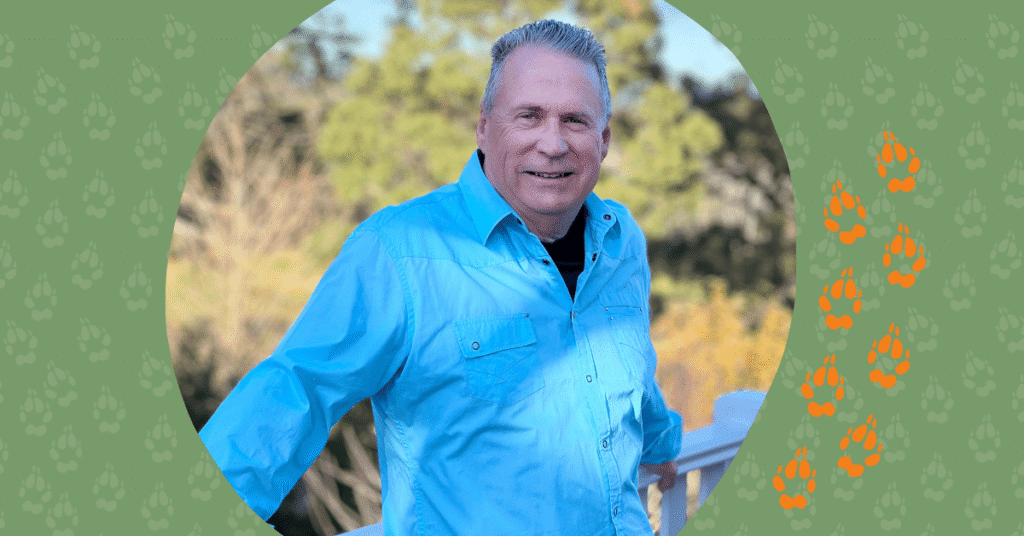

Earlier this month, Southern Highlands Wildlife Sanctuary’s Peter Lewis and John Creighton joined Margot Law, Senior Project Officer for Koalas (Southern Highlands) with the NSW Koala Strategy, for a field trip in Morton National Park.
The visit formed part of the NSW Koala Monitoring Program, a state-wide initiative that uses specialised songmeters: recording devices that detect and log koala bellows. These audio surveys are one of several tools being used to understand koala populations, how they move across the landscape, and how best to protect their habitat.
Across New South Wales, the Koala Group under the NSW Department of Climate Change, Energy, Environment and Water leads the monitoring effort, with hundreds of units now operating in national parks and reserves.
The Sanctuary’s involvement marks an important step in its growing partnerships with researchers and conservation agencies.
The Southern Highlands region, once home to thriving koala populations, has recorded very few sightings in recent years being affected by the Black Summer bushfires
The good news is that recent data indicates a more robust koala presence in and around Morton National Park, with surveys detecting numerous koala bellows across the landscape of more than 4,000 hectares between Marulan and Kangaroo Valley. Thousands of recorded bellows confirm that koalas are still active in the area which highlights the species’ resilience and ongoing recovery in the region.

Being part of the monitoring project allows SHWS to contribute to current conservation science while helping validate what’s happening on the ground. As Peter Lewis explained in an internal discussion, working with the Koala Group brings SHWS valuable credibility and ensures its work aligns with state research. “This kind of collaboration gives us a seat at the table,” he said in background discussions.
The fieldwork with Margot Law strengthens that connection. Law, who oversees monitoring for the Southern Highlands, is responsible for managing the acoustic data that helps identify koala presence and distribution. By assisting with installations and site assessments, SHWS has joined a growing network of contributors working to restore koala populations across the region.
Peter Lewis said these collaborations are central to the Sanctuary’s long-term vision, and their planned Education and Research Centre in Bundanoon will become a hub for connecting field science, community engagement and habitat renewal. By combining local data collection with public education, the Sanctuary hopes to inspire the next generation of environmental stewards.
For SHWS, the Morton National Park monitoring work is both practical and symbolic. It shows that conservation is not confined to theory or policy; it begins with people on the ground gathering information that will inform real-world outcomes.
The Sanctuary also recognises the limitations of current techniques. While the songmeters provide valuable data, they can overestimate population size. SHWS is exploring complementary methods such as infrared drone surveys and on-foot ecological studies, supported by advice from researchers at Flinders University.
This combination of technology and hands-on observation will help ensure that future efforts are based on robust evidence. Each monitoring trip, each data set, and each shared conversation adds another piece to the puzzle.
Together, they bring the Southern Highlands and NSW one step closer to seeing koalas safely restored to the forests of Morton National Park.
Help us grow this vision. Become a member or make a tax-deductible donation today.