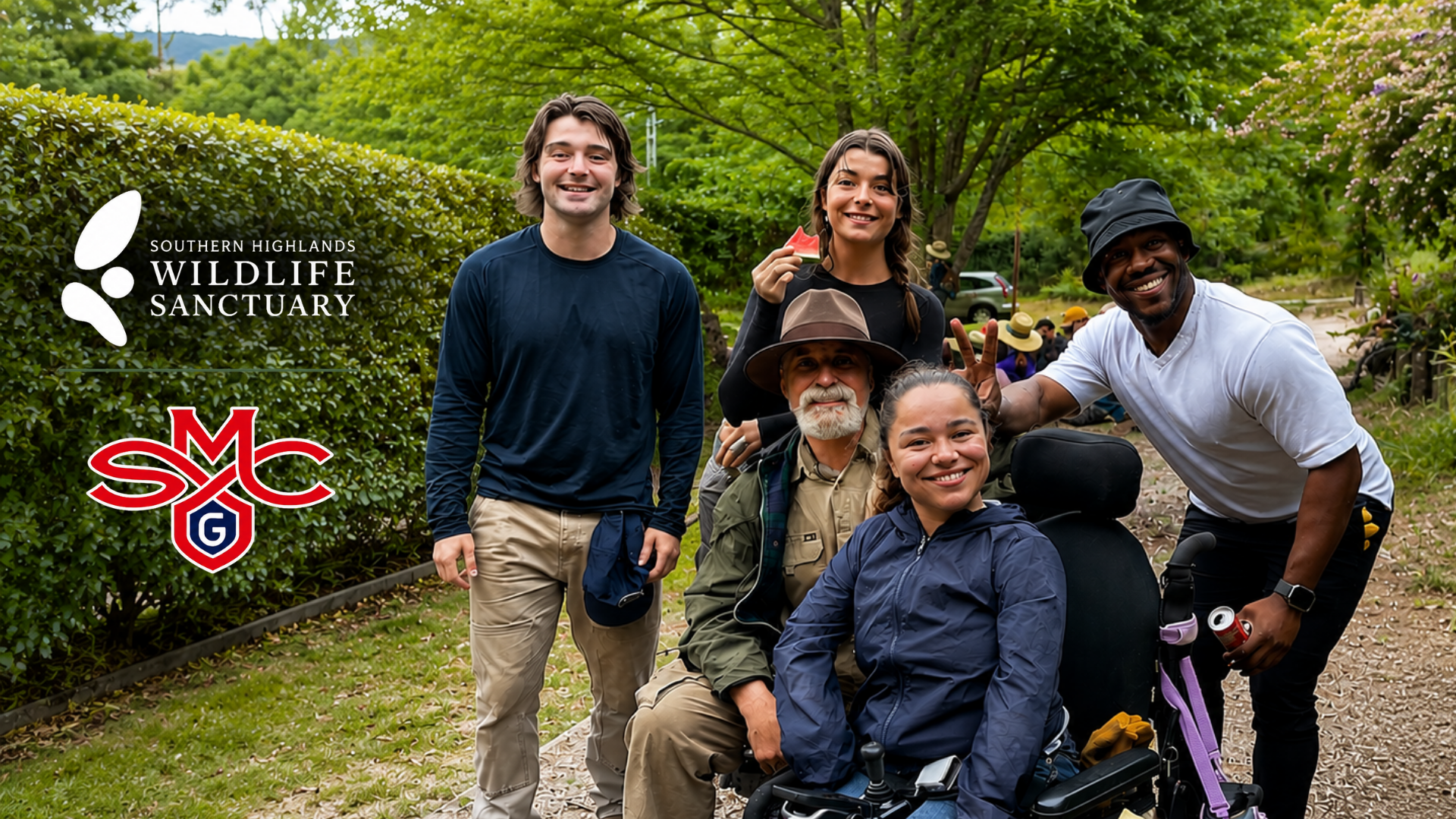
For a group of students from Saint Mary’s College of California, a recent visit to the Southern Highlands Wildlife Sanctuary turned out to be something rather different from a study tour.
Set among the eucalypts and rolling hills of the Southern Highlands, the experience brought together wildlife conservation, environmental stewardship and cultural exchange. Students had the chance to work shoulder-to-shoulder with Australian wildlife carers and see, up close, what it actually takes to protect native species and the ecosystems they depend on.
Led by Associate Professor Derek Marks, the trip was designed to pull learning out of the lecture hall and into a place where science, compassion and community are inseparable.
“The visit to the Southern Highlands Wildlife Sanctuary serves both an educational and mission-driven purpose for my students,” said Marks.
“It provides students with an immersive opportunity to engage in meaningful service, environmental stewardship and global citizenship while applying their academic knowledge in a real-world context.”
During their time at SHWS, students came face-to-face with the realities of wildlife conservation in Australia; from habitat rehabilitation and ecosystem protection, to the long shadow bushfires continue to cast over native wildlife populations.
For many, it was their first time working alongside wildlife carers. Seeing the patience, skill and quiet dedication that goes into rehabilitating a vulnerable animal left a mark of its own.
“My hope is that students gain a meaningful, firsthand understanding of the dedication, expertise and compassion required to protect and rehabilitate native wildlife,” Marks said.
The experience also sat comfortably alongside Saint Mary’s College’s Lasallian values, particularly its commitments to respect, social justice and inclusive community. As Marks observed, those principles don’t stop at the human world. They extend into how we engage with animals, ecosystems and the living environment around us.
For SHWS, visits like these are part of something larger. Conservation work is urgent and hands-on, but education is what makes it lasting. By opening the Sanctuary to students from abroad, SHWS hopes to spark a deeper global understanding of the challenges facing wildlife, and to inspire the next generation of people who might do something about them.
The visit also created space for genuine cultural exchange. Beyond the conservation work itself, students had the opportunity to meet Australians, hear their stories and develop a real feel for this country’s relationship with its land and its wildlife.
“I hope they build authentic connections with Australians and learn directly from them about their culture, values and relationship with the land,” Marks said.
“These personal interactions enrich the experience beyond conservation work, fostering global awareness, cultural understanding and a broader sense of shared responsibility.”
Importantly, this is not expected to be a one-off. Marks sees real potential for the partnership to grow through student research, service-learning placements and ongoing faculty collaboration.
“This ongoing partnership represents a meaningful extension of the College’s mission and core principles in action,” he said.
“The collaboration creates a mutually beneficial relationship among Saint Mary’s College, our students, Australian wildlife and the Southern Highlands Wildlife Sanctuary.”
As SHWS continues to grow its education and conservation programs, partnerships like this one speak to something encouraging: a genuine, growing international interest in community-led wildlife protection, and a recognition that education is not separate from conservation, but essential to it.
Because protecting wildlife is not only about caring for animals today. It is about giving the next generation, here and around the world, the knowledge, empathy and sense of responsibility to keep doing so for decades to come.
Help us Grow. Watch us Thrive.
Our work is only possible because our community stands with us. By joining as a member or donating, you help fund rescue equipment, habitat projects and the day-to-day care of local wildlife.
If you are interested in sponsorships or partnerships with us, please contact us directly.